
Contact Us
Schedule your appointment online or give us a call to get started today.

If you are told that a tooth requires a root canal procedure, there’s no need for alarm. Today, a root canal procedure is as routine and comfortable as receiving a dental filling. As a matter of fact, a root canal procedure is typically the best way to relieve toothache pain, save a damaged tooth, and preserve your natural smile.
At the office of Tello Smiles, we use the latest technology to provide precise and gentle care to help patients maintain healthy, beautiful smiles. Patient care and comfort are our top priorities, and you can rest assured your oral health is in the best of hands.
With a demonstrated success rate of well over 90%, root canal procedures remain the most effective way of saving and retaining a tooth that has been severely compromised by dental decay or injury. Because having a healthy natural dentition supports your oral health and overall well-being, root canal therapy, as opposed to having the involved tooth extracted, is a routine and widely recommended procedure. Across the United States alone, root canal procedures are routinely performed almost 41,000 times daily and close to 15 million times per year.

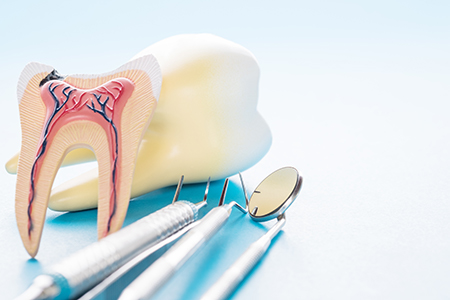
Your teeth are much more than just the hard outer biting surfaces and the roots. Inside each one is a central chamber containing connective tissue, a nerve supply, and blood vessels. Collectively, these core tissues, known as the dental pulp, help your tooth to grow and mature before it emerges into the mouth. Once your tooth is in place, the dental pulp provides nourishment, keeps the tooth vital, and alerts you of problems.
Having sensitivity to various stimuli like biting down and eating or drinking hot or cold items is a warning from the nerves inside your tooth that dental decay is present, dental trauma has occurred, or infection is brewing. The degree of pain that you experience depends on the extent of the damage and nerve involvement.
When a tooth needs a root canal, it is because the dental pulp has become irreversibly damaged or has died. However, if enough intact tooth structure remains, and there’s good bone support around the compromised tooth, you do not need to have the tooth extracted. A fully developed tooth does not require the dental pulp to remain functional. You can preserve your natural tooth by having your dentist perform a root canal on the tooth.
Although not every instance of dental discomfort indicates the need for root canal therapy, some of the warning signs that you might require this procedure include the following:
Pain is your body’s way of signaling that something is amiss. Although, there are many explanations for oral pain, one of the most common reasons is a toothache caused by decay or damage that has affected the tooth’s inner vital tissues. Patients in need of root canal therapy often report dental pain that wakes them up at night.
If the pleasure of sipping hot beverages or foods are overshadowed by dental pain that makes you wince, it's time to contact our office. Extreme sensitivity to hot or cold foods and drinks can indicate an inflamed, irritated, or non-vital dental pulp.
If it hurts when you bite and chew or when you just touch the tooth, it may indicate pulpal involvement, irreversible damage to the inner vital tissues of the tooth, or the presence of an infection.
A discolored tooth is often a message that the inner vital tissues, including the tooth’s nerve and blood supply, have been compromised. Teeth that have sustained an injury may demonstrate discoloration as the internal tissues have devitalized.
An injury that chips or fractures a tooth can also traumatize the dental pulp or even compromise so much tooth structure that a root canal procedure is required to save the tooth.
Swelling of the gums around a tooth may indicate that an infection has developed. While the swelling can worsen and cause more harmful consequences, sometimes a dental abscess starts to ooze pus and drain. In either case, prompt care is required.
The pathology associated with a tooth need of root canal therapy can damage the bone supporting the tooth and produce some mobility. Root canal therapy can often resolve this issue as tissue healing occurs.

While some of the above signs and symptoms can indicate other dental problems, they all require prompt evaluation and care. In some cases, a tooth in need of root canal therapy has not yet demonstrated overt symptoms. It may first get diagnosed and brought to your attention following a comprehensive, routine exam. Typically, these teeth show radiographic evidence of periapical pathology (root end pathology) or other types of structural damage.
It is essential that when a root canal is recommended that you receive timely care. Delaying the procedure increases the risk of more widespread and severe symptoms developing. A dental infection can pose significant consequences to your oral health and even threaten your overall health and well-being.
With the modern dental instruments and advanced techniques available today, having a non-surgical root canal procedure is often as comfortable as getting a routine dental filling.
While some root canals can be completed in one visit, others may involve 2 or 3 appointments. How long it takes depends on factors such as the number of canals in a tooth, its anatomy, and whether an active infection is present.
During a root canal procedure, our dentist will remove the diseased dental pulp, clean the internal portion of your tooth, and then fill all the prepared canals with a biocompatible filling material. Root canal therapy is typically performed under local anesthesia, but additional options in dental sedation are available to reduce any anxiety associated with dental procedures.
At the office of Tello Smiles, the care and comfort of our patients are our top priorities. Our goal is to help our patients enjoy optimal oral health and to keep them well informed every step of the way.
After your root canal procedure, you may experience the following:
Immediately following your dental visit, you may experience a period of lingering numbness. Normal sensation typically returns within an hour or two. However, until the anesthetic has completely worn off, it’s essential to protect yourself from unintentionally biting or injuring your lips, cheeks, gums, or tongue. Be mindful of chewing, drinking hot beverages, or smoking.
A root canal procedure will alleviate the pain of a toothache. However, you may still experience some mild to moderate discomfort in the immediate aftermath when the anesthesia wears off. These feelings should subside within days. To help prevent any undue pressure, which may cause pain, the biting surface of the involved may be slightly filed and taken out of occlusion. Our office will also recommend appropriate over-the-counter pain medications and provide a prescription if indicated.
If you have been given a prescription for antibiotics to treat or prevent an infection, it’s essential to complete the course of medications as prescribed.
Even with a temporary filling, a tooth with a root canal remains vulnerable to stress and can fracture until a permanent crown or suitable permanent restoration is placed. In the interim, be mindful of the involved tooth. Try to chew on the opposite side of the mouth and avoid hard and sticky foods.
While you need to be mindful of a tooth that has received root canal therapy, it’s essential to continue to brush and floss. By maintaining proper oral hygiene, you’re preventing further problems as well as supporting healing and optimal oral health.
To rebuild the strength and integrity of a tooth that has received a root canal therapy, it needs to be restored with a permanent crown or suitable restoration. Until that time, the remaining tooth structure is weak and vulnerable to fracture. The sooner a permanent restoration is placed, the sooner you can bite and chew with confidence and ease.
With proper maintenance and care, a tooth that has been treated with root canal treatment can last a lifetime.
At the office of Tello Smiles, we’re dedicated to providing the highest quality of care. If you have any additional concerns, continuing discomfort, or signs of an infection, or concerns following your procedure, contact our office for prompt attention and care.
A root canal procedure is the best way to save a tooth that has been damaged by decay or injury and preserve your natural smile. The alternative is an extraction and treatment to replace the tooth. While at times a tooth is non-restorable and an extraction is the only option, when possible, it’s best to try and save your natural tooth. With proper care, a tooth with root canal therapy can serve your smile well for many years to come.
Despite lingering myths from before the age of modern dental anesthesia and technology, having a root canal procedure today is as routine and comfortable as visiting the dentist for a filling. While the procedure is performed under local anesthesia with your tooth completely numbed, we can also discuss options in dental sedation.
Whether the symptoms of a dental infection subside after a course of antibiotics, a draining abscess provides you with some temporary pain relief, or a tooth with radiographic evidence of pathology has not yet developed symptoms, it’s essential, before an infection worsens or occurs, to have a root canal procedure performed. In this way, the tooth can be disinfected, filled, and sealed to protect your health and avoid further problems.
If you have sustained a dental injury, have a toothache, jaw pain, swelling, or are experiencing any other unusual and uncomfortable oral symptoms, contact our office immediately for care. Dental problems that have not been evaluated and treated can significantly worsen, producing more severe damage and consequences for the involved teeth, your oral health, and even your overall wellbeing. Once you get in touch with our office, our friendly and compassionate office team will get you in for care at your earliest convenience.
While some root canal procedures can be completed in one visit, others may involve 2 or 3 appointments. How long it takes depends on various factors, including active infection, the number of canals in the tooth, and the tooth’s location or anatomy.
With a success rate that exceeds 95%, root canal therapy remains the most effective procedure to save a tooth in which the inner vital tissues have been damaged. However, as with all healthcare procedures, there are a small percentage of cases where the teeth become symptomatic a second time. The good news is that many of these teeth can still be saved with root canal retreatment or a minor surgical procedure known as an apicoectomy.
The best ways to maintain a tooth with root canal therapy are to get the proper restoration required to rebuild and protect the tooth, maintain proper oral hygiene, and schedule appointments for routine dental checkups and care.
Saving a tooth with root canal therapy is a wise investment that, in the long run, is typically less costly and invasive than having the tooth extracted and replaced with a fixed bridge or implant. As far as the exact cost of care, it can vary depending on which tooth is being treated. Many dental insurance plans provide coverage for root canal therapy. At the office of Tello Smiles, we do our best to optimize your dental benefits and minimize your out-of-pocket expenses. Our staff will answer all your questions about the cost of care and discuss all your payment options.
At the office of Tello Smiles, we use the latest technology and most effective methods of care to provide precise and gentle care. Our reputation for excellence is based upon a consistent record of achieving successful treatment outcomes while providing prompt, stress-free, and convenient treatment for every type of dental need.
Schedule your appointment online or give us a call to get started today.