1714 25th Ave N, Texas City, TX 77590


Invisalign® offers a modern alternative to traditional braces: a series of custom, nearly invisible aligners that correct alignment and bite issues while fitting comfortably into everyday life. Designed to be removable and discreet, these clear aligners let patients pursue orthodontic improvements without altering their daily routines.
Using advanced digital planning and precision manufacturing, Invisalign clear aligners move teeth gently and predictably over time. For many people, this approach balances clinical effectiveness with esthetic convenience, making it easier to choose treatment that integrates with work, school, and social life.
Clear aligners offer a low-profile way to pursue orthodontic improvement. Because the trays are transparent and form-fit, they are far less noticeable than metal brackets, which can be an important consideration for professionals, students, and anyone who prefers a subtle option. That discretion often makes patients more comfortable committing to the length of treatment required to achieve meaningful results.
Another important advantage is hygiene: aligners are removable for eating and cleaning, so patients can maintain their usual brushing and flossing habits. This helps reduce the risk of staining and makes daily oral care more straightforward compared with fixed appliances.
Finally, aligner therapy tends to have a predictable cadence—switching sequential trays every one to two weeks—so progress is easy to track. This structure gives patients a clear sense of momentum and makes it simpler to coordinate follow-up visits with their dental provider.
Modern aligner therapy begins with a precise digital scan of your teeth. That scan is used to create a 3-D treatment model that maps out tooth movement from the current alignment to the desired outcome. This planning phase is essential: it allows your dentist to visualize the steps of tooth movement and make adjustments before a single tray is manufactured.
Clinicians can review and refine the virtual treatment path, identifying when attachments, interproximal reduction, or small refinements are required to reach the planned outcome. Because the entire sequence is simulated in software, the process reduces guesswork and fosters a higher level of control over complex movements.
Once the plan is finalized, a series of custom aligners is produced to match the planned sequence. Each aligner advances the teeth incrementally; together, they translate the digital plan into measurable physical changes over time.
After an initial consultation and digital scan, you’ll receive a clear outline of the treatment sequence and what to expect at each stage. Early appointments focus on assessment and planning; subsequent visits are generally scheduled to monitor progress and make minor refinements if needed. Most patients come in every four to eight weeks for quick checkups and to pick up the next sets of aligners.
Most people wear aligners for 20–22 hours per day, removing them only to eat, drink (except water), and perform oral hygiene. Staying consistent with wear time is the most important factor influencing how quickly treatment progresses and whether results align with the planned outcome.
Because aligners are swapped at home, daily life is largely uninterrupted. Patients often report minimal disruption to speech or activities after a short adjustment period, and any initial sensitivity periodically associated with tray changes typically subsides within a few days.
Clear aligners are versatile and can address many common orthodontic concerns, including mild to moderate crowding, spacing, and certain bite irregularities. They are also effective for aligning front teeth and making aesthetic improvements that support overall dental health.
That said, some complex movements—severe jaw discrepancies or major vertical corrections, for example—may require adjunctive therapies or a different orthodontic approach. During your consultation, a clinical evaluation will determine whether aligner therapy alone is appropriate or if additional treatments should be combined for the best outcome.
A thoughtful treatment plan always balances patient goals with clinical realities. Your dentist will explain which tooth movements are achievable with aligners and when complementary techniques or appliances might be recommended to attain the healthiest, most stable result.
Successful aligner treatment depends on a partnership between patient and provider. The clinician’s role is to design an evidence-based plan, supervise progress, and make timely adjustments. The patient’s role is to follow the recommended wear schedule, attend monitoring visits, and communicate any concerns about fit or comfort.
Regular reviews allow your provider to confirm that teeth are responding as planned and to adapt the strategy if subtle changes are required. This collaborative approach reduces surprises and helps ensure the final alignment is both esthetic and functional.
With a practiced clinical team and careful patient compliance, aligner therapy can be a reliable path to a healthier, more confident smile. When you choose a dedicated dental practice, you are working with clinicians who prioritize predictable, lasting results.
As pioneers in aligner development and digital orthodontics, Align Technology and its manufacturing platforms support precise planning and consistent tray fabrication. These systems draw on large datasets and engineering refinements to improve fit, control, and comfort across a wide spectrum of cases.
Custom-made for each patient, clear aligners are fabricated to the exact specifications of the digital treatment plan. Progress is achieved by wearing each tray in sequence so that, over time, the teeth settle into their new positions with consistent guidance from the treatment plan and clinical oversight.
And because the trays are removable, routine oral hygiene is easier to maintain, helping protect enamel and gum health throughout treatment. Maintaining excellent home care and attending scheduled monitoring visits are two simple ways to help ensure a smooth, effective course of therapy.

Your first visit focuses on a thorough evaluation of tooth position, bite relationships, and overall oral health. This assessment sets the foundation for a personalized plan that matches your objectives while addressing any dental needs that could affect treatment.
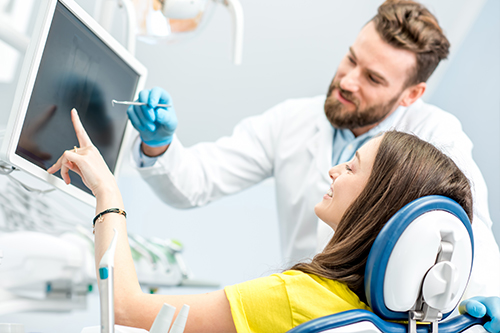
We use a fast, precise digital scan to capture the current state of your teeth. From that scan, a virtual treatment simulation can show the anticipated progression and likely end result, helping you understand what to expect before aligners are produced.
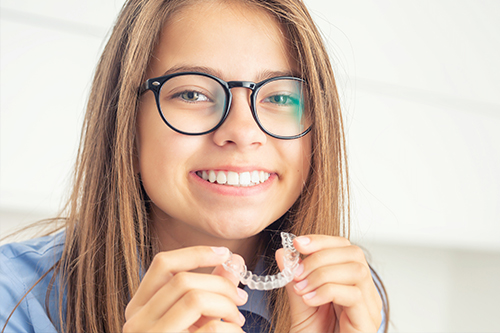
Each tray is manufactured to align with your unique treatment plan. Materials and design prioritize a secure fit and patient comfort, while small planned adjustments in the trays guide incremental tooth movement.

From pickup to completion, your dental team monitors progress and provides guidance at each interval. Regular check-ins help verify that treatment is tracking as planned and let clinicians address minor refinements promptly.
Short videos explain treatment basics, demonstrate patient experiences, and illustrate how aligners work in daily life.
*Invisalign is a registered trademark of Align Technology, Inc.
At Tello Smiles, we aim to offer clear, modern orthodontic options that blend clinical precision with everyday convenience. If you’re curious whether Invisalign® aligners are a good fit for your smile, contact us for more information.
There are many options for patients who want to avoid metal braces! The most popular alternative orthodontic treatment is Invisalign®, which are clear plastic aligners designed to straighten teeth. After an examination of your teeth, your dentist will determine which option is best suited to your wants and needs.
According to the Invisalign® website, the cost for treatment is approximately the same as the cost for metal braces. A portion of this cost may be covered by your insurance. Please call us to set up a consultation and discuss potential payment plan options.
The first step is to schedule a consultation with your doctor, so they can devise a treatment plan that is best suited to your individual dental needs. Once approved, you will receive your first set of aligners. Your doctor will then regularly monitor the movement of your teeth and new aligners will be ordered according to the progress made in your treatment plan.
Invisalign® aligners are made of clear, flexible plastic. The company received a patent for this material – SmartTrack® – to be used exclusively for Invisalign treatment purposes. These aligners are FDA approved and nearly invisible!
Your doctor will give you an estimate regarding how long your Invisalign® treatment should take, which will depend on your specific needs. The average length of time for treatment is approximately 12-18 months. However, some patients may see results far sooner. Remember to wear your aligners exactly as instructed by your doctor to obtain the best results.
Your doctor will most likely recommend that you wear retainers following your Invisalign® treatment. This is a precaution that will prevent your teeth from shifting back to their original positioning. It is important to follow your doctor's instructions exactly to ensure long-lasting results.
You must wear your aligners for up to 22 hours daily. You may remove them for eating, drinking and regular oral hygiene.
No. Unlike braces, you may eat whatever you like as long as you remove the aligners before eating. Prior to placing the aligners back on, it is important to brush your teeth and the aligners after you eat.
Like any orthodontic treatment, there is a short adjustment period. The more you speak with the aligners on, the quicker you will adjust.
There will be some pressure and minor discomfort for a day or two after each initial insertion. This is a sign that your teeth are moving sequentially into their final position.
It is recommended that you remove your aligners prior to chewing gum as the gum will stick to the aligners.
We discourage smoking with aligners as the cigarette smoke will tend to discolor them.
Brushing them with toothpaste will keep them fresh and clean.
Regular office visits are every five to six weeks. This will ensure that your Invisalign treatment is progressing as planned.
All orthodontic patients are instructed to wear their retainers at night indefinitely. Sleeping with your retainers in at night will ensure a healthy bite and maintain the new position of your teeth.
Yes, if their teeth, including second molars, have grown in completely.
Quick Links
Contact Us
